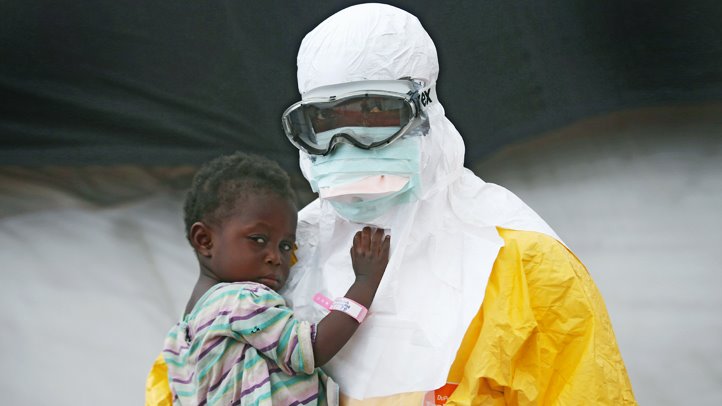
Ebola remains a significant threat in Africa, and outbreaks are common and frequent. This knowledge community is here to connect research teams with each other and to share resources, methods, training and recommendations from their research.
Between 2014 and 2016, West Africa experienced the largest outbreak since the discovery of the disease in 1976, resulting in more cases and deaths than all other previous outbreaks combined.
On August 1st 2019, it was officially declared that an Ebola outbreak was occurring in North Kivu and Ituri provinces of the Democratic Republic of Congo. There have been over 2,500 confirmed cases, and health workers are battling to keep the disease contained. This is being classed as aPublic Health Emergency of International Concern (PHEIC) by WHO and is the second largest outbreak since the one in 2016. The WHO Director-General declared the end of the PHEIC for this event on 26 June 2020.
This online health literacy course will explain what the Ebola virus is, where the outbreak has occurred, what the signs and symptoms of infection are, how to treat an infection and how to avoid infection
This online health literacy course will explain what the Ebola virus is, where the outbreak has occurred, what the signs and symptoms of infection are, how to treat an infection and how to avoid infection
Research, Evidence Generation and Capacity Building
This knowledge hub has been set up to support the local research community, response teams, laboratories, clinicians, public health professionals, community engagement practitioners and partners involved in evidence generation during the current Bundibugyo virus disease outbreak.
The current outbreak has been declared by WHO as a Public Health Emergency of International Concern in the Democratic Republic of the Congo and Uganda. WHO confirmed that the outbreak is caused by Bundibugyo virus and reported, as of 16 May 2026, 8 laboratory-confirmed cases, 246 suspected cases and 80 suspected deaths in Ituri Province, DRC, across at least Bunia, Rwampara and Mongbwalu health zones. WHO also noted that there are currently no approved Bundibugyo virus-specific vaccines or therapeutics.
Outbreaks such as this require rapid, coordinated and locally led research to answer urgent questions, generate evidence to guide action, and ensure that knowledge and capacity are strengthened where they are needed most. This knowledge hub serves as a focal point for researchers, laboratories, clinicians, public health teams, community engagement practitioners and partners working locally and globally to support the response.
The aim is to provide practical tools, training, guidance and opportunities for collaboration so that research can be embedded within the response from the outset and conducted in a way that delivers immediate and lasting benefit to affected communities. This hub is designed to support evidence generation and capacity strengthening in ways that complement and help implement recommendations from WHO, Africa CDC and national public health authorities.
Priority Areas for Research and Evidence Generation
Based on priorities identified by the World Health Organization and the Africa Centres for Disease Control and Prevention, three areas require urgent attention:
+ 1. Community engagement and public health interventions
Effective response depends on trust and meaningful partnership with affected communities. Knowledge sharing and local contextual understanding are needed to identify how best to communicate risk, address concerns, and support communities to adopt measures that reduce transmission while respecting local contexts and priorities. This includes identifying approaches that improve understanding, counter misinformation, strengthen trust, and reduce high-risk practices associated with caregiving, funerals, health-seeking and movement between communities.
Community engagement is also essential for early reporting, contact tracing, isolation, safe care, safe and dignified burials, and acceptance of public health measures. In previous Ebola responses, trust, local leadership, listening to communities and adapting communication to local realities have been central to improving response effectiveness. The current outbreak is occurring in a context where health systems are already under pressure, population movement is high, and communities may be facing multiple concurrent risks. These factors make community engagement and locally grounded public health interventions especially important.
Approaches and tools are shared here, including links to the MESH platform, which provides practical resources and examples to support community engagement in health research and outbreak response. MESH is an open-access collaborative platform for people involved in community engagement with health research in low- and middle-income countries.
Community engagement and public health resources
Resource
Resource type
Language available
Why it is useful/summary
TGHN - Introduction and Practical Guide to Community Engagement and Involvement (CEI)
Online course
Relevant for teams planning ethical and impactful community engagement in health research (Ref)
WHORisk Communication and Community Engagement (RCCE) Readiness and Response Toolkit: Ebola Disease, 2025
Toolkit
Provides structured recommendations for planning and implementing RCCE activities for Ebola readiness and response (Ref)
TGHN - MESH – Ebola community engagement resources
Learning materials
Mainly English
Provides open-access resources, examples and learning on community engagement for Ebola and other outbreak contexts (Ref)
TGHN - MESH – Communication and community engagement response to Ebola: evidence and lessons (2017)
Evidence summary/learning article
English
Summarises evidence and lessons from Ebola community engagement responses, useful for designing locally grounded approaches (Ref)
TGHN - Ethics Review of Social Research on Health-Related Topics
Online course
English
Useful for teams preparing social science, community engagement, or qualitative research protocols during the outbreak (Ref)
WHO safe and dignified burial guidance for Ebola and Marburg
Technical protocol/burial guidance
English
Provides guidance on the safe management of bodies and burial of patients who died from suspected or confirmed Ebola or Marburg virus disease (Ref)
IFRC Safe and Dignified Burial, an implementation guide for field managers
Implementation guide/field manual
English
Practical field guide for managers and burial teams working during Ebola and Marburg outbreaks (Ref)
Open WHO Ebola diseases channel
Online training platform / course collection
Provides online learning resources on Ebola and Marburg diseases, including prevention, screening and response topics (Ref)
Community Engagement Hub: Updated Epidemic Control Training Package for Volunteers (IFRC material)
Training package / community-level response tool
English and French
Strong fit for capacity strengthening. It includes epidemic control and RCCE training materials for volunteers and includes content on qualitative community feedback mechanisms used during the Ebola response in DRC (Ref)
+ 2. Laboratories, diagnostics, and surveillance
Rapid identification and monitoring of cases are central to controlling the outbreak. This requires strong laboratory systems, reliable diagnostic pathways and coordinated surveillance. Research and operational work are needed to assess diagnostic performance, strengthen sample handling and testing processes, and connect laboratory, surveillance and data science capacity across institutions and countries.
Africa CDC has called for urgent regional coordination following the outbreak in Ituri Province, DRC, and an imported Bundibugyo virus disease case reported by Uganda. Africa CDC highlighted the need to align laboratory information, contact management and cross-border risk assessment, reinforcing the importance of coordinated laboratory, surveillance and data systems (Ref).
Capacity strengthening is needed across the full diagnostic and surveillance pathway. This includes recognition of suspected cases, use of case definitions, safe sample collection, packaging, transport, biosafety, testing, sequencing, result communication, contact tracing and data management. WHO’s 2024 interim guidance on diagnostic testing for Ebola and Marburg virus diseases provides operational recommendations for laboratory personnel, clinicians, health workers, public health officials and other stakeholders involved in diagnosis and care (Ref).
This area brings together technical guidance, training resources and tools to support laboratories and surveillance teams, enabling local teams to generate, manage and analyse data safely and effectively.
Laboratories, diagnostics, and surveillance resources
Resource
Resource type
Language available
Why it is useful/summary
TGHN Data and Sample Governance for Biomedical Research
Online course
English
Relevant for laboratory-linked research, sample sharing, biobanking, data governance, and future diagnostic/vaccine studies (Ref)
The Data Life Cycle: Practices and Policies
Online course
English
Useful for surveillance and research teams collecting, managing and using outbreak data. It is aimed at early-career researchers, postgraduate students and clinical research support staff collecting, managing and using health data (Ref)
TGHN - Introduction to Data Management for Clinical Research Studies
Online course
English
Useful for teams setting up clinical characterisation, surveillance-linked datasets, or observational studies (Ref)
TGHN - Introduction to Reviewing Genomic Research
Online course
English, Spanish, French, Portuguese
Potentially relevant because genomic sequencing is important for strain identification and outbreak tracking (Ref)
TGHN - Geographical Access in Healthcare
Online course
English
Potentially useful for mapping access to care, referral pathways, outbreak service coverage, or cross-border preparedness. The course equips learners with basic knowledge and techniques to quantify geographical/spatial access to care (Ref)
TGHN - Ethics and Best Practices in Sharing Individual Level Research Data
Online course
English
Useful for outbreak surveillance and laboratory-linked research where data sharing may need to happen quickly across teams, institutions or countries, while protecting confidentiality and respecting governance requirements (Ref)
WHO diagnostic testing for Ebola and Marburg virus diseases: interim guidance, 2024
Technical diagnostic guidance
English
Provides current operational guidance for laboratory diagnosis, diagnostic testing, specimen handling and testing pathways (Ref)
WHO infection prevention and control guideline for Ebola and Marburg disease, 2023
Technical guideline / IPC guidance
English
Relevant for laboratory and health facility teams because safe diagnostic pathways depend on IPC, PPE, triage and health worker protection (Ref)
OpenWHO IPC course for Ebola and Marburg disease outbreaks
Online training
Self-paced training for health workers on IPC measures in healthcare settings during Ebola or Marburg disease outbreaks (Ref)
WHO Ebola Virus Disease Consolidated Preparedness Checklist
Preparedness checklist/operational readiness tool
English
Older but useful for readiness planning, especially at national or subnational level (Ref)
Africa CDC Strategic Framework for Strengthening Cross-Border Surveillance and Information Sharing in Africa, 2024
Relevant for cross-border preparedness, data sharing and regional surveillance coordination (Ref)
Africa CDC Guidelines for Enhanced Surveillance of Sudan Virus Disease, 2023
Surveillance guideline
English
Although focused on Sudan virus disease rather than Bundibugyo virus disease, this may still be useful for viral haemorrhagic fever surveillance systems and preparedness in Africa (Ref)
+ 3. Vaccines and clinical research preparedness
There are currently no licensed vaccines specifically for Bundibugyo virus disease. WHO has noted that the absence of approved Bundibugyo virus-specific vaccines and therapeutics is a key concern in the current outbreak (Ref).
As candidate vaccines and therapeutics move through research and development, rapid mechanisms will be needed to assess them in affected settings. This includes establishing trial-ready capacity, ensuring trained research teams are in place, and enabling protocols, ethics and regulatory processes to be activated quickly.
Existing licensed Ebola vaccines are directed at Zaire ebolavirus, while broader filovirus vaccine research is still under development. Clinical research preparedness is therefore needed not only for future vaccine or therapeutic studies, but also for observational and operational studies that can help answer urgent questions during the current response.
The current outbreak creates evidence needs around clinical presentation, severity, transmission patterns, supportive care, outcomes, diagnostic performance, health worker exposure, community perceptions and cross-border spread. Research readiness requires standardised protocols, ethics and regulatory preparedness, trained teams, data systems, laboratory capacity, community engagement and equitable partnerships.
The Global Health Network community will work with partners including CEPI, EDCTP and others to support preparedness for vaccine and therapeutic studies and to ensure that evidence can be generated rapidly and equitably.
Vaccines and clinical research preparedness resources
Resource
Resource type
Language available
Why it is useful/summary
TGHN - ICH Good Clinical Practice E6(R3) course
Online certified training course
English, French, Spanish and Portuguese
Free training to support research teams in applying GCP principles across study design and delivery, aligned with updated international standards (Ref)
TGHN - Research Ethics Online Training (V2)
Online course
English
Free research ethics training adapted from a WHO e-learning package, useful for outbreak research preparedness and ethical evidence generation (Ref)
TGHN - Good Clinical Laboratory Practice course
Online course
English and French
Training for laboratory teams on GCLP principles, data reliability, quality, consistency and integrity in clinical trial laboratories (Ref)
TGHN - Downloadable Templates and Tools for Clinical Research
Research templates / operational tools
English
Useful for teams needing practical templates for study set-up, documentation and implementation (Ref)
TGHN - Introduction to Informed Consent
Online course
English, French
Important for any observational study, clinical characterisation study, specimen-linked study, vaccine preparedness study or therapeutic trial (Ref)
TGHN - Ethics in Epidemics, Emergencies & Disasters: Research, Surveillance & Patient Care
Online course
Relevant to outbreak research. It covers ethical issues faced by health professionals and policymakers in epidemics, including research, surveillance and patient care (Ref)
TGHN - Introduction to Collecting and Reporting Adverse Event
Online course
English, French
Relevant for vaccine and therapeutic preparedness, as well as clinical studies where adverse events need to be documented and reported consistently (Ref)
TGHN - The Study Protocol
Online course
English, French, Spanish
Very relevant for local teams preparing observational studies, clinical characterisation protocols, diagnostic studies, social science protocols or future vaccine/therapeutic studies (Ref)
TGHN - Clinical Research Operations for Study Coordinators
Online course
English
Useful for building the capacity of local study coordinators who may support clinical characterisation, observational studies, diagnostic studies or future vaccine/therapeutic trials (Ref)
ISARIC Clinical Characterisation Protocol
Research protocol / clinical data collection framework
English
Supports rapid, standardised observational clinical research during outbreaks and can be tailored to local needs (Ref)
ISARIC Ebola and Other Filoviruses Data Tools
Ebola clinical data forms / core outcome tools
English
Provides Ebola infection data forms and focused critical data variables/core outcome measures for patient management records and clinical research datasets (Ref)
ISARIC case report forms (Ebola and other filovirus)
Case report forms / research data tools
Useful for standardised clinical and epidemiological data collection in Ebola and filovirus outbreaks (Ref)
ISARIC Clinical Epidemiology Platform
Data collection and analysis platform
English
Provides standardised tools to collect and analyse clinical data, launch databases, visualise data and support collaboration. Useful for teams planning clinical characterisation studies (Ref)
WHO-AFIRM Strategic Research Agenda for Filovirus Research and Monitoring, 2021–2031
Strategic research agenda / roadmap
Sets out longer-term research priorities for filoviruses, including anticipation, surveillance data sharing, vaccine evaluation and therapeutics (Ref)
+ 4. Supporting Research Embedded in the Response
Connect here to work together, set out planned studies and request support where needed. Guidance can be provided for all elements of evidence generation, including study design, protocol development, ethics, data collection tools, community engagement, laboratory-linked research, clinical characterisation and research preparedness.
Researchers, laboratories, clinicians, public health teams, community engagement practitioners and partners are encouraged to register their work, share planned studies, identify evidence gaps, and request guidance, collaborators or technical support.
This space will support:
Sharing of practical tools and training resources
Identification of urgent evidence gaps
Ssupport for locally led research
Guidance on study design, protocols, ethics, data collection and research implementation
Translation and sharing of key resources
General information: Resources providing an overview of the Ebola virus and the current outbreak
The WHO gives an overview of the Ebola virus by providing information on symptoms, treatment and prevention. Fact sheets, training and guidance are also linked for health workers.
The Centre for Disease Control and Prevention presents data on the latest Ebola outbreaks as well as diagnostics, treatment, transmission and prevention.
The British Medical Journal offers a comprehensive overview on the Ebola virus epidemiology, diagnosis, treatment and follow-up through a variety of resources.
Support the community
Thank you for visiting The Global Health Network, please take a moment to read this important message. As you know, our aim is to enable equity in access to research knowledge and this is successfully delivering support and training to 1000’s of research teams all over the world. But we need your support!. If you have benefited from this research skills and knowledge sharing facility, please help us sustain this remarkable and unique provision of information for those who could otherwise not access such support and training. We would be really grateful if you could make a donation or ask your employer or organisation to contribute to the costs of maintaining this platform and the generation of new contents for all users. Just a small contribution from everyone who can afford to pay would keep this available for those who cannot. Thank you, we really appreciate your part in this community effort to better equity in global health research.